Login
Login Help Center
 How to get verified

Fraud Article
MoneyLIVE highlights: Balancing security & seamless banking
As digital payments accelerate, customer expectations rise—and so do fraud risks. How can financial institutions deliver seamless experiences while staying secure?

The world of payments is evolving at a pace, and customers increasingly demand seamless, instant experiences. At the same time, fraud is rising across the industry, pushing companies to stay one step ahead. How can financial institutions deliver the smooth user experience customers expect while maintaining robust security?
This was the central question at a recent fireside chat at MoneyLIVE Payments Europe. The discussion featured Gareth Murray, Head of Financial Crime Risk at Monzo Bank, and Geo Jolly, Lead Product Manager, Biometrics at Veriff. They explored the current fraud landscape, the delicate balance between user experience and security, and the future of authentication in digital banking.
Here are the key highlights from their insightful conversation.
The modern fraud landscape in banking
The scale of financial crime is staggering. Gareth Murray pointed out a startling statistic: in the UK, fraud now accounts for 40% of all crime. The threat is no longer a distant possibility but a prevalent risk that affects a growing number of people. And it’s not just about financial loss, the emotional impact of fraud is also considerable. Monzo research revealed that 83% of people affected by scams said the emotional cost was worse than losing the money. This makes preventing fraud all the more important to minimise financial and emotional harm to the customer.
The discussion highlighted two main dimensions of this challenge: volume and sophistication.
Volume: The rise of simple scams
On one end of the spectrum, banks are dealing with a high volume of relatively simple scams. Purchase scams, often originating from social media marketplaces, are among the most common. A customer pays for goods that never arrive, falling victim to a straightforward but effective fraudulent scheme.
Sophistication: AI-powered attacks
On the other end, fraud is becoming increasingly sophisticated. Organized, industrial-scale players are leveraging advanced technology to execute complex romance and investment scams. This is where AI-generated deepfakes and synthetic identities come into play.
Geo Jolly noted that Veriff’s Fraud Index Report 2025 shows a significant rise in AI-based attacks, with around 78% of survey respondents encountering at least one deepfake in the past year. While many of these are currently “shallow fakes”, where a real person’s video is manipulated with voiceovers or mouth overlays, the technology is rapidly advancing. As AI improves, it will become nearly impossible for the human eye to distinguish a deepfake from a genuine video, making robust technological solutions essential.
Gareth added that while complex synthetic identity creation is less common in the UK due to strong credit bureau networks, the constant evolution of technology requires banks to stay one step ahead.
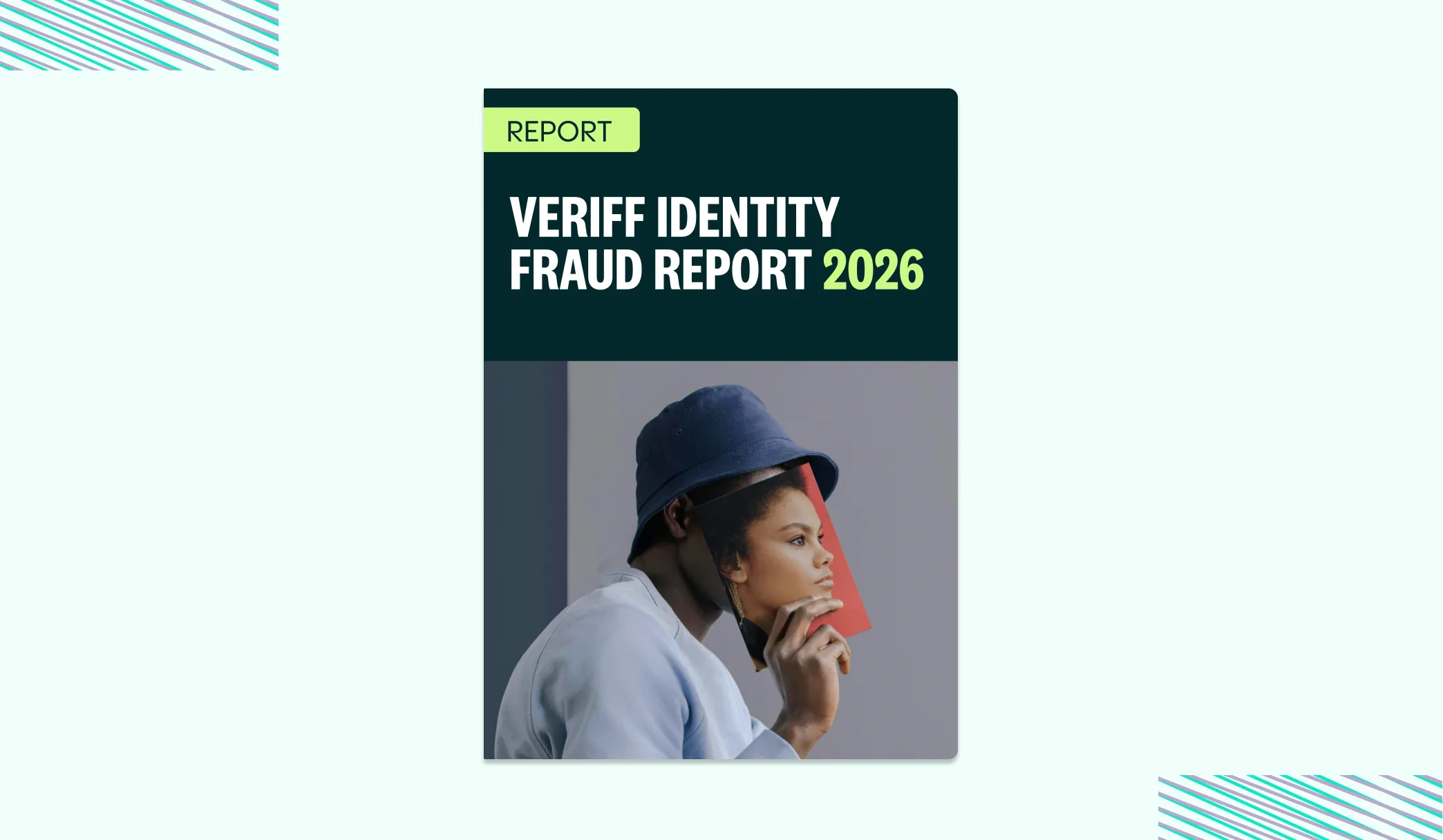
Explore key fraud statistics, regulatory shifts, and actionable recommendations from Veriff’s new report.
Balancing friction and flawless experience
A core challenge for any bank is striking the right balance between security and user experience. Fraud prevention can introduce friction, frustrating legitimate customers.
The conversation revealed that “friction” is not a one-size-fits-all concept. Some customers welcome extra security steps, as it makes them feel more protected. Others prioritize speed and convenience.
Monzo has several layers of protection that are active by default for all customers. These include industry-first features such as Call Status and Undo Payments. Monzo also uses machine learning to do even better customer risk assessments, credit decisioning, and real-time fraud detection.
For customers who want enhanced protection, Monzo also offers opt-in security features, such as:
- Known locations: Customers can set specific physical locations where they need to be when making bank transfers or savings withdrawals over their chosen limit.
- Trusted contacts: Customers can ask a trusted friend or family member to double check any bank transfers and savings withdrawals over a chosen limit, to act as a “second pair of eyes” to prevent potential fraud.
- Secret QR codes: Customers receive a personalised, highly-secure QR code that’s stored on a different device or printed, and which they need alongside their phone to approve a payment or savings withdrawal over their chosen limit.
These opt-in features empower users to control their own security levels, turning a potential point of friction into a valuable, trust-building tool.
The role of data in authentication
When does a payment journey require extra security? The answer lies in data. Both speakers emphasized the importance of a multi-layered approach to authentication that relies on numerous data signals to assess risk in real-time.
Instead of subjecting every user to a high-friction process like a liveness check, banks can use passive signals to build confidence. These can include:
- IP address and location data
- Device information and history
- Behavioral biometrics (how a user holds their phone or types)
Geo Jolly shared an interesting anecdote where a large-scale account takeover attack was identified because every device involved in the fraudulent sessions reported a 100% battery status, a clear indicator of an organized device farm. This highlights how even seemingly minor metadata can be a powerful tool in fraud detection.
When risky signals are detected, such as a new device, an unusual location, or an IP address associated with previous fraud, the system can then introduce a “step-up” authentication measure. This could be a passive liveness check, an active challenge, or even a review by a human agent. This risk-based approach ensures that friction is applied intelligently.
The future of authentication and industry collaboration
Looking ahead, the discussion turned to the future of authentication. Gareth Murray predicted that the industry will move toward giving customers more control over their digital identities. This involves leveraging banking data more effectively to create secure, portable identity solutions that customers own and manage.
Another critical theme was the need for greater industry collaboration. Fraud is not a competitive advantage; it’s a collective, industry-wide problem. Banks, telcos, social media companies, and technology partners must work together to share data and insights to combat fraud more effectively. Breaking down the silos that prevent data sharing is essential for building a more secure ecosystem for everyone.
As Geo Jolly concluded, building trust is a shared responsibility. By combining advanced technology, rich data signals, and cross-industry collaboration, the financial sector can create a future where seamless experiences and robust security go hand in hand.
Key takeaways
- Fraud is evolving: Financial crime ranges from high-volume, simple scams to highly sophisticated, AI-driven attacks.
- Personalize security: Give customers control over their security settings. Opt-in features can build trust and cater to individual preferences for enhanced security with more friction.
- Use data intelligently: A multi-layered, risk-based approach to authentication is key. Use passive data signals to keep journeys seamless for legitimate users and apply friction when risk is high.
- Collaboration is crucial: Fraud is an industry-wide problem that requires an industry-wide solution. Sharing data and insights between institutions is vital to protecting customers.
The conversation at MoneyLIVE Payments Europe made it clear that building a trusted and secure digital banking environment is a dynamic and ongoing challenge. By embracing technology, empowering customers, and working together, financial institutions can successfully navigate this complex landscape.