
 Login
Login Help Center
 How to get verified
Sanctions, PEP & adverse media screening solutions
Screen customers against sanctions lists, Politically Exposed Persons (PEP), and adverse media to mitigate risk. Ongoing monitoring keeps your business protected as circumstances change.














Veriff’s AI-powered AML screening solution to mitigate business risk
Show regulators you take financial crime seriously while making onboarding quick and friction-free for your users.

Comply with regulations
Get a comprehensive view of your users and comply with AML/CTF requirements.

PEP and sanctions
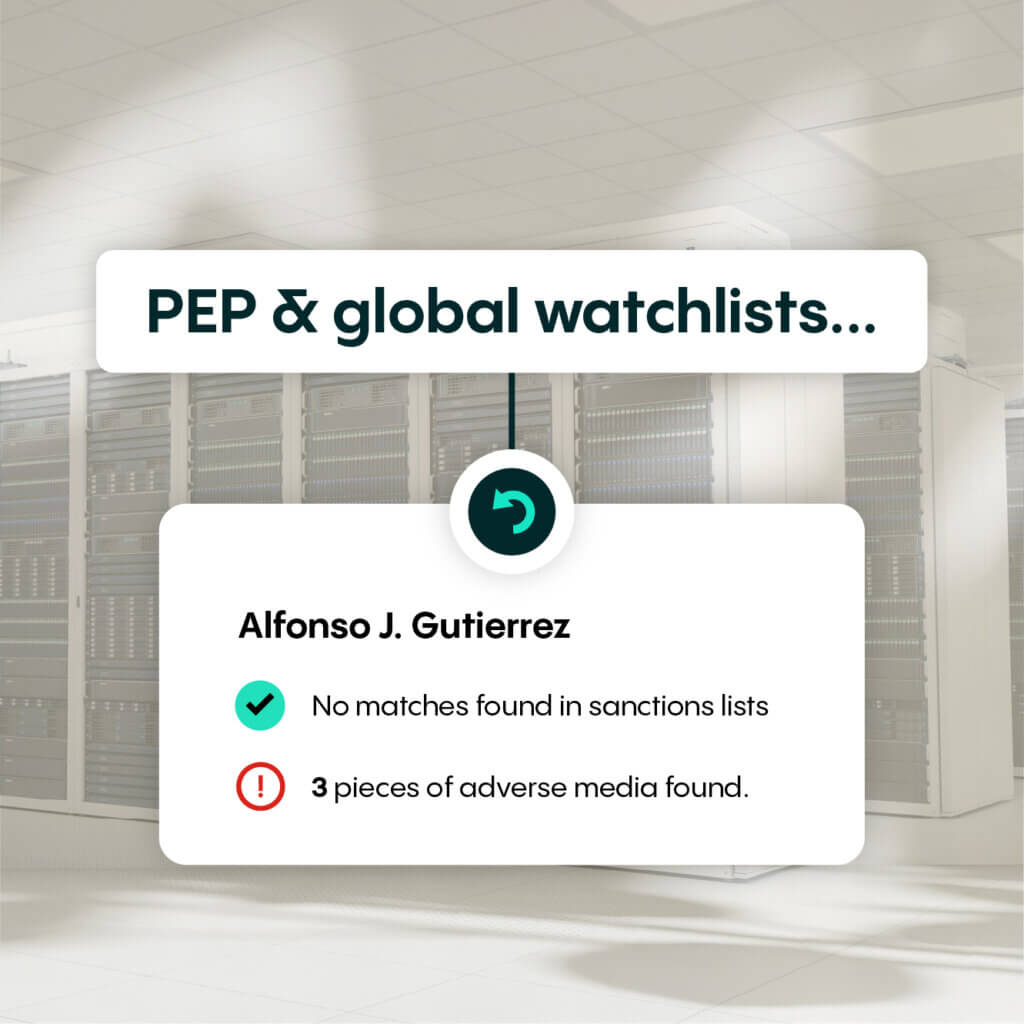
Screen customers against thousands of continually updated sanctions and PEP watchlists including OFAC, UN, HMT, EU, DFAT, and more.

Adverse information and media
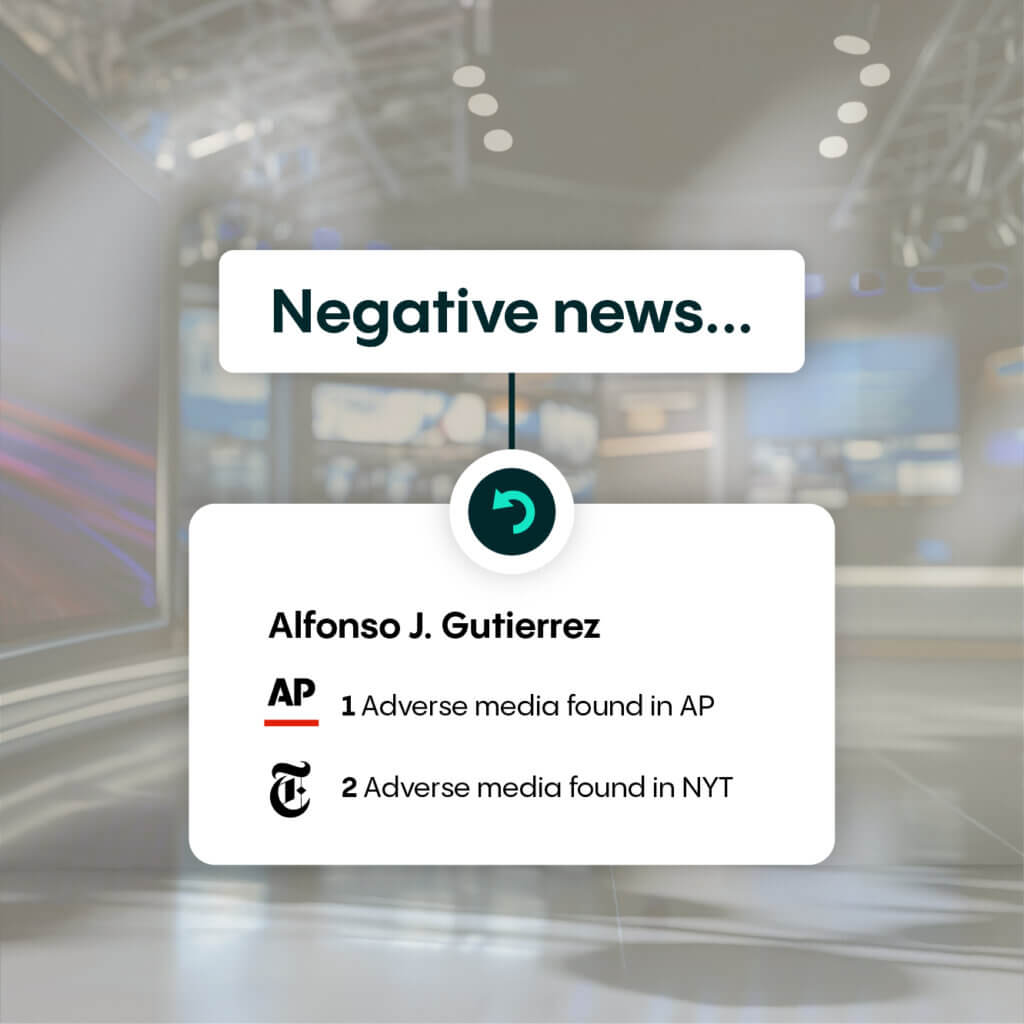
Scan a continually updated database of 8+ million adverse media profiles to identify negative news or media attention about individuals who could harm your business.

Ongoing monitoring
Continuously monitor watchlists and adverse media for changes that may introduce risk.
How AML Screening works
Take a look at how AML screening works with Veriff’s Identity Verification solution.
Ensure that your customers are who they say they are and fight identity fraud with Veriff’s powerful identity verification platform. With superior document fraud detection and user experience, you don’t have to compromise between strong fraud prevention and high customer conversion rates.
Comply with regulations and fight financial crime by screening users against global PEP and sanctions watchlists. Veriff’s list coverage is updated in real-time, bolstering confidence in your KYC process.
Even peripheral connection to crimes can indicate risk. Veriff screens for negative information and news to help businesses assess the potential risk exposure presented by their customers.
Political and regulatory environments change very quickly. With real-time data, continuously screen customer lists with Veriff’s ongoing monitoring of PEP watchlists, global sanctions lists, and adverse media. Automated screening notifies you if something changes with your existing or previously onboarded customers.


Accelerate onboarding checks while reducing risk
With Veriff, complying with KYC regulations doesn’t mean compromising the user experience. Our automated AML screening and ongoing monitoring solutions help keep your business compliant, mitigate risk, and keep out fraudsters while still creating a seamless experience for your genuine users.

Go global
Thousands of global sources contribute to our comprehensive coverage of Sanctions, PEPs, and watchlists.
Monitor watchlists closely
Coverage includes OFAC, UN, HMT, EU, DFAT, and many more from around the world.
Receive real-time updates
Veriff provides real-time notifications if your users match with newly added persons.
Reduce false positives
70% reduction in false positives and improved alert quality compared to legacy technology.
Screen against adverse media
Identify adverse media across millions of articles using artificial intelligence. All profiles are accurately labelled with FATF-aligned categorization to reduce false positives.
Check PEP and sanctions daily
PEP profiles are checked for updates daily, and sanctions are updated every 15 minutes.

Customers around the world trust Veriff









Compliant

Compliant
Certified

Certified

Certified

Level 1
Level 2


Don’t compromise
Automate your AML screening with Veriff and create a user journey that gets you more genuine customers.
Get in touch to get started.
FAQs


What is AML screening?
Anti-money laundering (AML) screening is the process of checking customers against sanctions lists, Politically Exposed Persons (PEP) watchlists, and adverse media sources to identify financial crime risk before or during onboarding.
What is a Politically Exposed Person (PEP)?
A Politically Exposed Person is someone who holds, or has held, a prominent public position, such as a government official, senior executive of a state-owned enterprise, or a close associate of such individuals. PEPs carry a higher risk of involvement in bribery or corruption, making them a required screening category under AML regulations.
Which sanctions lists does Veriff screen against?
Veriff screens customers against thousands of global sanctions and PEP watchlists, including OFAC, UN, HMT, EU, DFAT, and many more. Sanctions lists are updated every 15 minutes; PEP profiles are checked for updates daily.
What is adverse media screening?
Adverse media screening identifies negative news or media coverage linked to a person or entity — such as involvement in fraud, corruption, or other financial crimes. Veriff scans a continuously updated database of 8+ million adverse media profiles, categorised using FATF-aligned labels to reduce false positives.
What is ongoing monitoring in AML compliance?
Ongoing monitoring means continuously re-screening customers after initial onboarding not just at the point of sign-up. Veriff’s automated monitoring notifies you in real time if a previously cleared customer appears on a newly updated watchlist or adverse media source.
How does Veriff reduce false positives in AML screening?
Veriff uses AI to accurately label and categorise screening results, delivering a 70% reduction in false positives compared to legacy technology. This means your compliance team spends less time on manual review and more time on genuine risk.
Does AML screening work alongside identity verification?
Yes. Veriff’s AML Screening is designed to work as part of a complete KYC flow — starting with identity verification to confirm who your customer is, then screening them against sanctions, PEP lists, and adverse media before they’re onboarded.
Latest news & resources


