Login
Login Help Center
 How to get verified
ON THIS PAGE
- Welcome to Veriff, Rob Brazier!
- What have been your first impressions of the Veriff team and product so far?
- You've scaled product organizations at Apollo, Grammarly, and Twilio. What lessons are most relevant to Veriff today?
- As Veriff enters its next phase of growth, where will you focus first to sharpen execution and drive impact?
- You are known for your professional mantra, "Keep shipping." Can you elaborate on what that means?
- How do you translate deep technical strength into repeatable commercial success? What needs to be true for product excellence to become enterprise excellence?
- What defines a high-performing product organization in your view? What behaviors, rhythms, or principles matter most?
- How do you see product shaping the next chapter of Veriff's journey?
- You're an ultra-marathon runner. What has endurance sport taught you about leadership and building for the long term?
- Looking ahead two to three years, what would success at Veriff look like to you?
- To wrap up our conversation, could you share some recommendations - what is your must-read book or must-listen-to podcast?
March 17, 2026


Our People
Rob Brazier: “Shipping” is the heartbeat of a software company
Rob Brazier joins Veriff at a pivotal moment to help shape its evolution into a broader trust infrastructure. What drew him here—and why now? Here’s his story.

Rob Brazier is a seasoned product leader who recently joined Veriff. He has led platform-scale transformations at Apollo GraphQL, Grammarly, and Twilio, and will oversee Veriff’s product strategy as the company evolves from a category-leading identity verification provider into a comprehensive trust infrastructure. Learn more about Rob’s journey and why he chose Veriff.
Welcome to Veriff, Rob Brazier!
Really excited to have you on our team. Could you please share what drew you to Veriff at this moment in your journey?
Thanks for the warm welcome. I’m really excited to be here. A few things came together, making this the right moment for me.
First, the problem Veriff is solving has become dramatically more urgent because of AI. The same generative AI technologies that are transforming every industry are also making it cheaper and easier to create deepfakes, synthetic identities, and highly sophisticated fraud at scale. That means the need for trustworthy, globally reliable identity verification isn’t just growing — it’s accelerating. Being able to work on something that important and impactful was a big draw for me.
The second thing was the team. Veriff has built remarkable technology and assembled an incredible group of people. I’d actually worked with or gotten to know several members of the leadership team before, including Ott Kaukver and Carly Brantz from our time at Twilio, so I already had a sense of the caliber of talent and ambition here. And what really stands out to me is how global and diverse the Veriff team is. In a space like identity, where trust works differently across cultures, regulatory systems, and markets, that diversity is a real competitive advantage.

And then on a personal level, the timing just felt right. My two oldest daughters are in university now, and my youngest is old enough to drive and heading into her last couple of years at home. As a family, we’re entering a stage where I can spend more time on the road, working closely with colleagues and customers around the world. Family will always be my top priority, but this was one of those moments where the personal and professional stars really aligned.
So when you put all of that together — the importance of the problem, the strength of the team, and the timing in my life, Veriff felt like exactly the right place to be.
What have been your first impressions of the Veriff team and product so far?
What’s really stood out to me right away is how mission-driven the team is. People here genuinely believe in what we’re building, and in the role Veriff can play in shaping the future of digital trust. There’s also a real hunger – people want to win, and they want to make a meaningful impact on the industry. There’s a strong sense of support and teamwork. It feels like a group that has each other’s backs and understands that success is something we win together.
On the product side, there is a tremendous amount of value under the hood, way more than I could even see from the outside. Veriff’s technology is genuinely impressive. At the same time, I see an enormous opportunity ahead of us to grow, solve more problems for our customers, and expand the impact of Veriff in the market. That combination, a strong foundation with a massive opportunity ahead, is exactly what makes this exciting.
You’ve scaled product organizations at Apollo, Grammarly, and Twilio. What lessons are most relevant to Veriff today?
Customer obsession. This principle was drilled into me relentlessly by Jeff Lawson at Twilio, who was probably born with it but also learned it at Amazon. Customer obsession is more important today than ever. AI is rapidly destroying the moats, gatekeepers, and barriers to entry that have historically kept incumbent organizations safe from competitive threats and allowed them to ignore their customers. There is really only one strategy that can keep an organization growing through that kind of disruption: be ruthlessly, rigorously customer-centric.
Think at scale. This was one of our early leadership principles at Twilio, and it’s deeply relevant to Veriff. The idea is to anticipate where you’re going and invest early in systems that enable you to scale a consistent, great customer experience. We’re tackling a massive market opportunity that can touch literally every company and person on the internet. To win that opportunity, we need products and systems that work consistently and effectively for users everywhere — not bespoke solutions built for individual customers. We also have to bake back into our products all the knowledge and insights we gain from solving each customer’s problems, so the next hundred or thousand customers benefit from those investments.
Design and build the product architecture around the customer’s needs. Great products give customers tremendous leverage by hiding and simplifying the complexity of solving a specific hard problem, in a form factor that feels like an exact fit for the customer’s need. Platforms tackling big, complicated market problems have to make an outsized investment in properly factoring and segmenting their product portfolios to give their customers a clear, clean set of composable building blocks. This is part of the success story behind platforms like AWS, Twilio, Stripe, and Shopify. For some of these companies, this work was largely driven by a desire to provide a great developer experience, something that might be less important in an age of agentic coding tools, but it has huge follow-on benefits when it comes to clearly communicating your value to customers, enabling customer-centric pricing decisions, etc. This is a category of work that can feel hard to justify in a fast-growing startup, but it pays off tremendously. And no organization will always do this perfectly, so it’s important to identify and acknowledge a misstep early and act quickly to address it before it slows you down.
Invest in leadership culture to scale execution. When you’re tackling a market as varied and complex as identity, you can’t let any central team become a bottleneck to decision-making. Developing a principled, high-trust, high-accountability leadership culture is mission-critical for building an organization that can decentralize decision-making and move quickly to solve customer problems. And “leader” doesn’t mean “manager”, now more than ever, in the age of AI, every person has superpowers to ship improvements for customers. We’ve got to arm everyone in the organization with the strategic context and decision-making framework that enables them to act.
As Veriff enters its next phase of growth, where will you focus first to sharpen execution and drive impact?
Three things, right away:
- First, providing a clear strategic context, making sure every team understands where we’re headed, why, and how their work connects to the bigger picture.
- Second, investing in our product and design leadership, both by developing the great team that’s already here and by growing our bench with new talent.
- Third, partnering closely with sales and marketing to build a repeatable, high-performance capability for taking new products to market effectively.
We’ve got tremendous technology; now we need to make sure we’re consistently translating that into value our customers can see and buy.
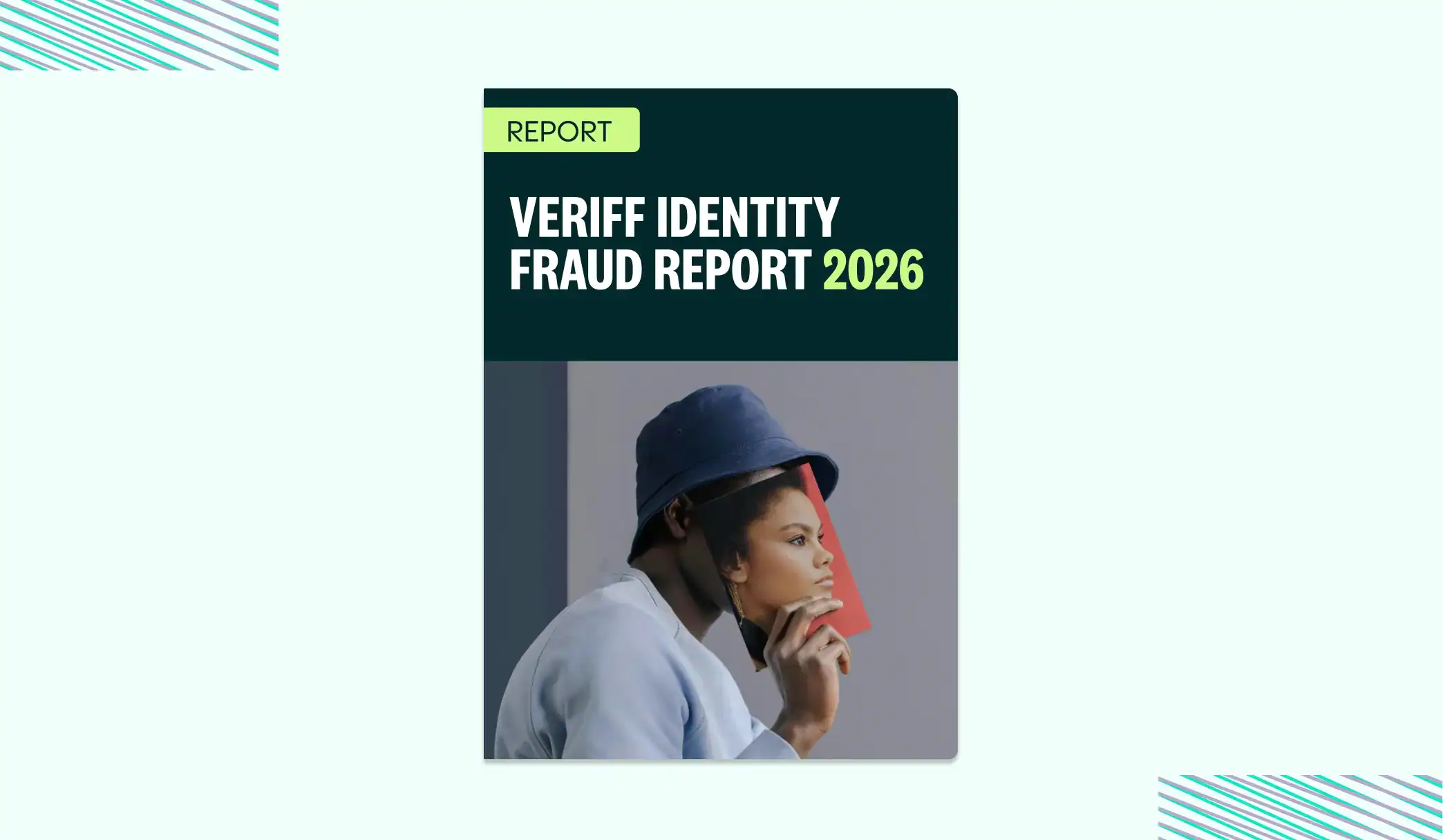
Explore key fraud statistics, regulatory shifts, and actionable recommendations from Veriff’s new report.
You are known for your professional mantra, “Keep shipping.” Can you elaborate on what that means?
For me, shipping is really the heartbeat of a software company. It’s how we create value for customers and how we learn what actually works in the market. There are many ways to gather insights, such as customer research, data analysis, and competitive intelligence, but ultimately, the most honest feedback you get is how customers respond to a product once it’s in their hands.
So when I say “keep shipping,” I’m really talking about maintaining that momentum of delivering value into our customers’ hands. It’s not just about releasing a feature and moving on. It encompasses the product release and the marketing launch, as well as all the iterative work required to drive adoption and real impact afterward.
And it’s definitely not about shipping for shipping’s sake; it’s about taking action that drives meaningful, valuable change in the world and in our customers’ lives through our products’ behavior and capabilities. That’s the kind of change that matters, and shipping is how we make it happen.
How do you translate deep technical strength into repeatable commercial success? What needs to be true for product excellence to become enterprise excellence?
It starts with having a clear point of view on the market: a perspective on the problem you’re going to solve or the opportunity you’re going to address, and how you’re going to solve it 10x better than the alternatives. From there, you can identify what technical capabilities are needed to make that vision a reality. When you do that well, you’re connecting technical strengths with something customers actually value.
From there, it’s about operational excellence: setting a framework of metrics that enables you to see objectively how well you are solving that problem, and then continually improving against those metrics. The bridge between product excellence and enterprise excellence is clarity of purpose backed by measurement.
What defines a high-performing product organization in your view? What behaviors, rhythms, or principles matter most?
On the principles side, it starts with customer obsession – a genuine, relentless focus on understanding and serving your customer. Great product organizations also have an insatiable curiosity, a hunger to learn more, to deepen their understanding of customers’ challenges and the potential of new technology to address them. And they hold themselves to high standards, always.
In terms of behaviors and rhythms, the most important is shipping. Great product teams ship fast and often. They’re not afraid to put something new into the market. In a company with a high-performing product organization, shipping defines the heartbeat of the business. This is in constant, productive tension with the high standards and customer obsession I mentioned earlier because you’re always asking, “Is this good enough?” The best organizations invest continuously in systems that simultaneously increase the pace of delivery AND raise the quality bar.
The other defining behavior is continuous improvement. Great teams protect and invest in the rituals, culture, and tools that allow them to regularly reflect, ask “how can we get better,” and take action to raise the bar.
How do you see product shaping the next chapter of Veriff’s journey?
We’re a product company. It’s the only way we can scale to address the need we see in the market. The identity verification challenge is massive, global, and growing more complex by the day. You don’t solve that with services alone; you solve it by building products that encode deep expertise into technology that works consistently, reliably, and at scale for thousands of customers. Product is how we turn what we know into something the world can use.
You’re an ultra-marathon runner. What has endurance sport taught you about leadership and building for the long term?
One of the biggest things ultramarathon training teaches you is to hold two things in tension. First, you set an ambitious goal, and if it’s a good goal, it probably scares you a bit. Second, without losing sight of that goal, you break the vision down into a set of clear, concrete inputs you can control: a training calendar with specific commitments, like a certain number of miles, at a certain target pace, on a specific day. And then you narrow your focus to just executing those plans, recalibrating as you go, learning from the feedback your body and performance give you, and adjusting the plan.
Building a product company feels very similar to me. You need a clear vision for the problem you’re solving and the impact you want to have in the world. You need that vision to propel you forward, to get you out of bed in the morning. But you can’t let the weight or scale of the vision overwhelm you or distract you from what needs to happen right now. You’ve got to keep your attention on what needs to happen today, identify the right inputs, execute against them, and adjust based on the feedback you’re getting along the way.
Looking ahead two to three years, what would success at Veriff look like to you?
That we’ve built a more trustworthy internet. We have thousands of customers who depend on us to keep their organizations, their users, and their customers safe from fraud and compliant with the law. We’ve also made using the internet meaningfully less frustrating. There’s less friction in accessing any online service because we’ve found more reliable, less effortful ways of distinguishing good actors from bad actors. You find yourself jumping through far fewer hoops to get stuff done online.
That’s the vision: a world where trust is a reliable infrastructure, not an obstacle.
To wrap up our conversation, could you share some recommendations – what is your must-read book or must-listen-to podcast?
It’s hard for me to pick just one, because the answer changes with my life season and current area of interest. But the books I’ve returned to countless times include the novel “A River Runs Through It” by Norman Maclean and “Meditations” by Marcus Aurelius. A few podcasts I never miss include “Interesting Times” by Ross Douthat, “More or Less” hosted by Jessica Lessin, and Ben Thompson’s “Stratechery“.