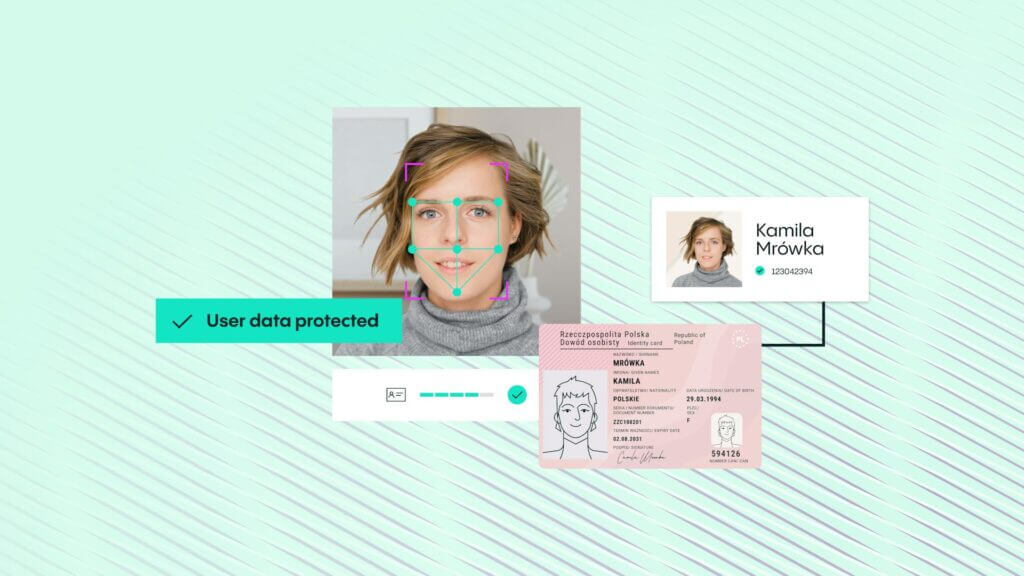
Due diligence is the process banks follow when they verify the identity of their customers and ensure that these customers are not involved with money laundering and financial crime. When carrying out due diligence, a bank must: While the majority of customers will be subjected to a standard level of customer due diligence (CDD), high-risk
Category: Blog Post
What is AML layering?
Criminal enterprises or individuals who are involved in financial crime usually end up with large amounts of cash. However, as this money comes from the proceeds of criminal activities, they cannot simply take it to the bank and deposit it into their account. Due to this, criminals aim to conceal the money they’ve obtained, “wash”
Common uses for biometrics (with examples)
Biometrics is a way of measuring a person’s physical characteristics. By using a piece of biometric data such as a fingerprint or a facial scan, an individual’s identity can be verified accurately in as little as one second. Today, our smartphones use biometric verification methods to verify a user’s identity and guard against unauthorized access. For example,
7 high-risk customer types and how to identify them
Regulated firms such as financial institutions are required to take a risk-based approach to customer due diligence (CDD) and ongoing monitoring. To prevent fraud, terrorist financing, and money laundering, firms must identify high-risk customers and undertake enhanced due diligence (EDD) processes. Here we’ll explain everything there is to know about high-risk customer types and the
The Seven Best Digital Banks in Europe
A new wave of digital banks has fundamentally changed the banking industry in recent years. Customers can now choose from a much wider range of innovative banking services. Disruption in the European digital banking and fintech sector has been particularly intense. New neo-banks and challenger banks have emerged and attracted many enthusiastic customers. For example,
Why video-game providers need to power up their security
Like the best games, growing a business has always come with an element of risk. Controlling those risks and maximizing opportunity are an essential part of ensuring success. From underage users accessing age-restricted content, to hackers, cheats and bullies, gaming providers face a plethora of challenges. Fast decisions A 98% check automation rate gets customers
How to make sure cheaters never prosper
Many people happily stream pirated content who would never dream of walking out of their local Walmart with a stolen item under their coat. Similarly, far more people seem ready to cheat when gaming than would admit to not playing fair in their everyday lives. For games providers, that’s a serious problem. Of course, cheating
How to protect your users’ data and assets
With an estimated one billion people worldwide playing games over the internet, revenue in the online gaming sector is set to hit over US$26 billion in 2023. That’s good news for games providers, but it’s also good news for cybercriminals. As online gaming increasingly becomes the norm, hacking attacks on gamers’ accounts are booming. Cybersecurity
Securing a seamless UX to onboard more gaming customers
Customer onboarding is a core focus for gaming operators worldwide, particularly as they seek growth in new and emerging markets. To secure a seamless user experience (UX) and build their customer base, operators must focus on automation, speed, and data protection. From prompt payouts to responsive customer support, players have high expectations for the customer
How to give in-game bullying the red card
While bad behavior wasn’t born with the internet, the online environment certainly provides fertile ground for a range of antisocial activity. The tendency for people to behave in the virtual world in ways they would never do in their everyday lives is familiar to anyone who ever stumbled into the middle of a Twitter spat.