
Veriff Deepfakes Report
2026

Introduction
by Ira Bondar-Mucci, Fraud Platform Lead, Veriff
As artificial intelligence continues to evolve, the proliferation of deepfake visuals presents an increasingly complex challenge for digital trust and identity verification. To better understand how the public is navigating this new reality, Veriff partnered with Kantar to conduct a large-scale survey in February 2026.
This report focuses on the United States market, benchmarking American respondents' ability to detect AI-generated visuals, their self-reported confidence, and their overarching concerns, and comparing these findings with those in the United Kingdom and Brazil. By analyzing how consumers interact with and perceive AI-manipulated content, the goal was to uncover the human vulnerabilities and technological gaps that organizations must address.

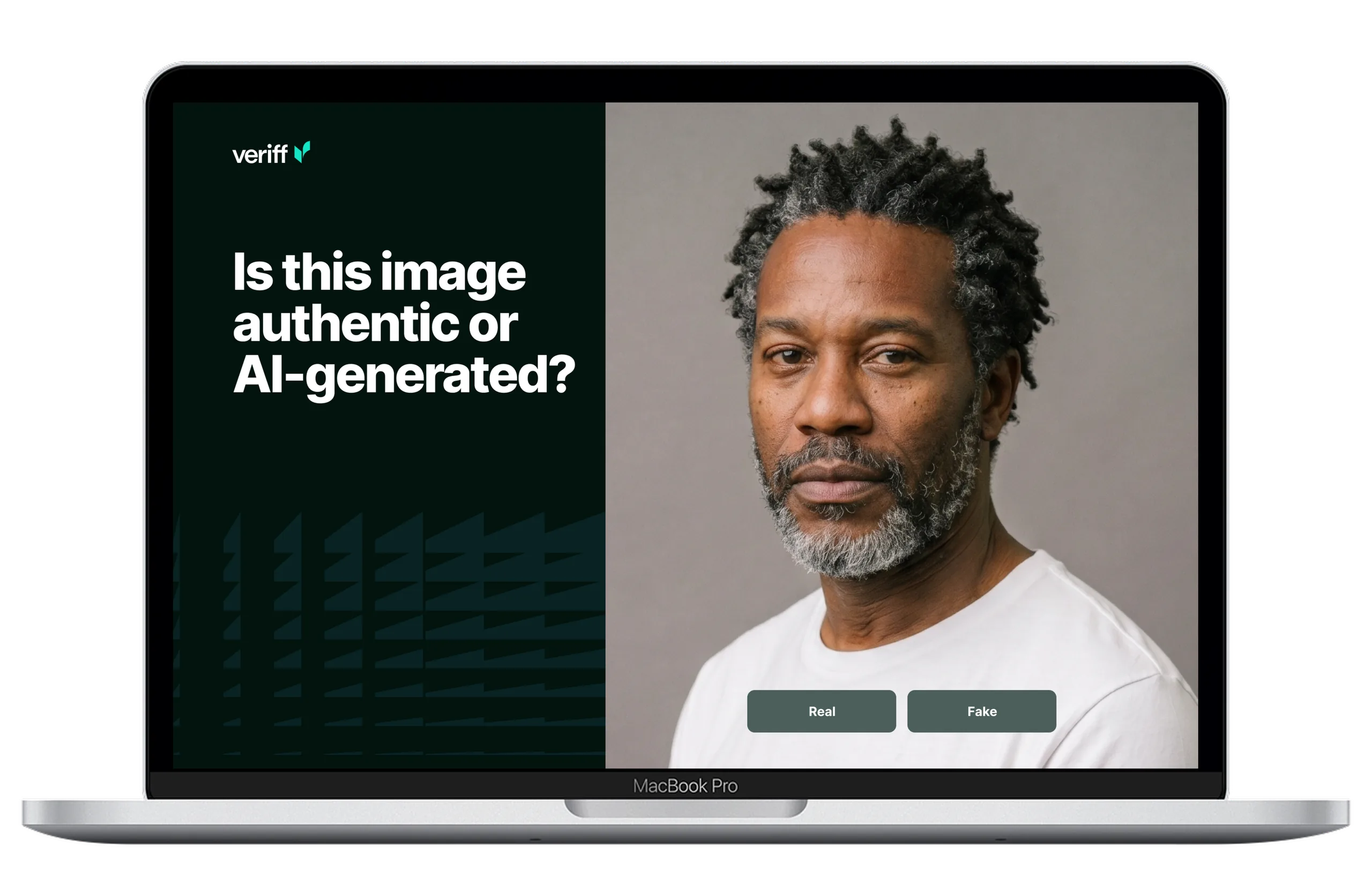
Most people are aware of deepfakes, yet their ability to distinguish them from reality is barely better than a coin flip.
Veriff initiated this research because we wanted to move the deepfake conversation beyond discussion and into evidence. Everyone in the identity industry talks about the threat of synthetic media, but very few have asked the most fundamental question: can people actually tell real from fake? The overall findings suggest most people are aware of deepfakes, yet their ability to distinguish them from reality is barely better than a coin flip.
For the US, the world's largest digital economy and the epicenter of generative AI development, this carries implications. If the humans on the other side of a screen can't distinguish an authentic identity from a manufactured one, then every digital interaction that relies on visual trust is compromised. That's not a future risk. It's a present reality. As a result, businesses can no longer treat identity verification as a routine compliance requirement. It must be understood as a critical component of digital infrastructure.

KEY FINDINGS
The detection deficit
1
Americans show lower awareness of deepfakes
Despite the rapid advancement of generative AI, respondents in the US report the lowest familiarity with deepfakes compared with other analyzed markets. Only 63% of US adults are familiar with the term "deepfake," lagging behind both the UK (74%) and Brazil (67%). Furthermore, while 80% of Brazilian respondents report encountering deepfakes online, the US mirrors the UK, with only around 60% reporting such encounters.
Are you familiar with the term ‘deepfake’?
67%
Brazil
74%
UK
63%
USA
24%
Brazil
16%
UK
25%
USA
10%
Brazil
10%
UK
12%
USA
Yes
No
Not sure
In most countries, younger users are more aware of deepfakes.
However, the US is an exception – younger American users do not show higher awareness of deepfakes compared to older demographic.
“There's a paradox at play: the US is the global epicenter of AI development, yet American consumers are the least familiar with one of its most dangerous byproducts. In markets like Brazil, where digital fraud and social engineering are a persistent part of daily life, people have been conditioned to question what they see online. In the US, there's historically been higher baseline trust in digital content, with the conversation centered more on data privacy than content authenticity. The problem is that low awareness doesn't reduce risk – it amplifies it. If you don't know what a deepfake is, you're far less likely to pause and verify when you encounter one.
This research shows that as AI-generated content becomes indistinguishable from reality – and we're already there – the human eye alone is no longer a reliable line of defense. Awareness remains a critical first step: it gives people the instinct to question rather than trust by default. But businesses and policymakers in the US need to close this awareness gap urgently, while simultaneously investing in automated verification technologies that can catch what humans simply can't.”
Awareness remains a critical first step: it gives people the instinct to question rather than trust by default.
No matter the type of fraud that’s deployed, the damage to revenue and reputation can be severe.
Ira Bondar-Mucci
2
Detection accuracy is barely above chance, with videos proving the hardest to spot
When respondents were tested on their ability to distinguish between real and AI-generated visuals, performance across all markets, including the US, was extremely low. On a scale from -1 to 1, where:
- 1 represents perfect accuracy
- 0 represents random guessing (a coin flip)
- -1 represents consistently incorrect answers
American respondents achieved an average detection score of 0.07, matching the UK and slightly behind Brazil's 0.08. A score of 0.07 indicates that, while participants performed slightly better than chance, the difference is minimal. In practical terms, these scores show that the average person is almost guessing when attempting to identify deepfakes, performing only a tiny fraction better than a coin flip.
The US respondents' distribution of results further highlights this challenge
14%
16%
15%
38%
18%
Got the lowest scores
Performed lower than chance
Performed at chance level
Performed slightly above chance
Achieved the highest scores
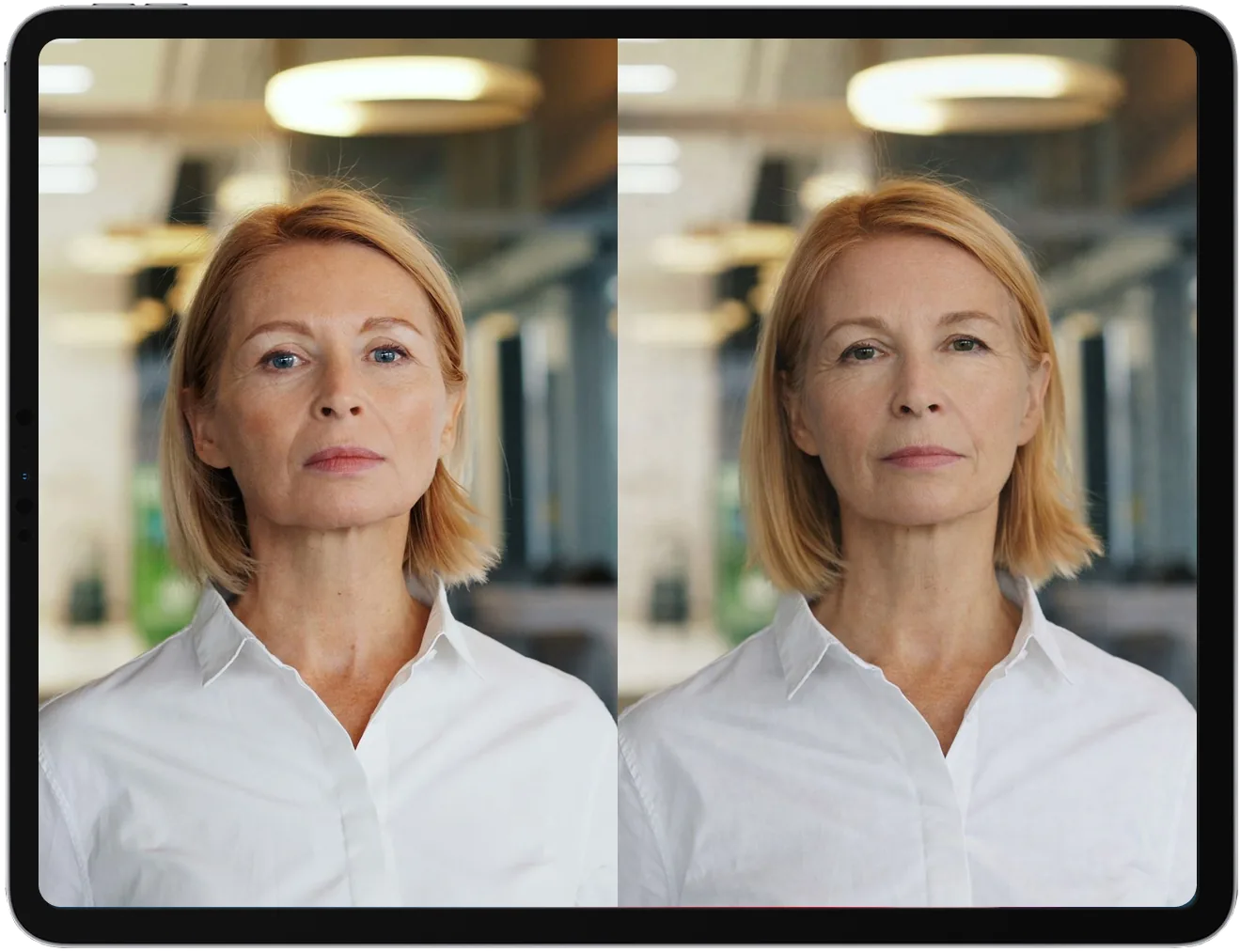
Looking at specific media formats, fake videos were frequently perceived as authentic, while genuine videos were often misidentified as fake. When real and fake videos were presented side by side, results differed clearly by gender. For the male video pair, respondents were nearly evenly split (52% correct). But for the female pair, a clear majority (70%) misidentified the fake as real, making it one of the hardest visuals in the entire study to correctly assess.
Image-based content showed similar patterns. Fully AI-generated images of women and complex “faceswap” visuals were especially deceptive, while results varied more for male subjects.
Overall, the findings indicate that visual inspection alone is no longer a reliable method for verifying authenticity.
The scoring scale (-1 to 1)
The survey researchers calculated an accuracy score for each respondent on a scale ranging from -1 (completely inaccurate, getting every single one wrong) to 1 (perfect accuracy: identifying every fake and real visual correctly).
The coin toss baseline (Around 0)
A score hovering right around 0 (specifically between -0.05 and 0.05) is defined by the researchers as chance level. This means that the respondent performed roughly as well as they would have if they had blindly guessed or flipped a coin.
Bottom line
While survey respondents technically performed better than chance, their scores were so close to zero that the average person is essentially just guessing. Out of a perfect score of 1.0, a score of 0.07 shows that the general public is almost entirely unprotected by their own eyesight, performing only a tiny fraction better than a coin flip when trying to spot a deepfake.
Scoring methodology & baselines
Expand for more info
3
A gap between confidence and actual ability
A significant portion of the US public overestimates its ability to spot manipulated media. Around half of the users in the US (and Brazil) are confident in their ability to identify deepfakes, which is notably higher than the 44% confidence rate observed in the UK. While higher confidence generally correlates with higher accuracy in the US and UK, a dangerous "high-risk" segment exists.
Across the markets, approximately 7% of users are classified as high-risk:
- Demonstrate low detection accuracy
- Express high confidence in their abilities
- Rarely or never verify suspicious content
The high-risk segment is generally less common among the oldest age group in most markets, but again, the US is the exception, meaning older Americans are just as likely to fall into this category. Respondents with a university education are less likely to fall into the "high-risk" category of users who are overly confident but inaccurate.
Approximately 7% of users across markets are classified as high-risk
Our research reveals what may be the most dangerous dynamic in the deepfake era: overconfidence.
"Around half of US respondents believe they can reliably spot manipulated media and while a slight majority do perform better than random chance, detection scores across both confident and less confident groups remain close to guessing. This confidence-competence gap creates a false sense of security that fraudsters and bad actors are primed to exploit. When people believe they can't be fooled, they stop looking for the signs – and that's precisely when they're most vulnerable, whether to a synthetic identity used in financial fraud or a fabricated video designed to manipulate trust.
Most concerning is the roughly 7% of users across markets who fall into what we classify as the 'high-risk' segment – people who perform poorly at detection, are highly confident they'd catch a fake, and rarely bother to verify suspicious content. This group represents the perfect target for AI-driven fraud and manipulation.
For businesses, the implication is clear: any organization that still relies on manual review processes or customer self-attestation is inheriting this vulnerability directly. Human judgment is becoming an increasingly unreliable safeguard, and verification needs to be built into systems by default – automated, technology-led, and not dependent on the end user's self-assessed ability to tell real from fake."
This confidence-competence gap creates a false sense of security that fraudsters and bad actors are primed to exploit. When people believe they can't be fooled, they stop looking for the signs.
No matter the type of fraud that’s deployed, the damage to revenue and reputation can be severe.
Ira Bondar-Mucci
Deepfakes are evolving.
Is your business' KYC prepared?


KEY FINDINGS
User behaviors and concerns
4
Creating AI content does not significantly improve detection
Creating AI visuals is already a widespread practice in the US. Nearly 49% of US respondents report having created AI-generated images or videos at least occasionally (18% multiple times, 31% rarely). This makes Americans significantly more likely to dabble in AI generation than British respondents (38% overall), though they trail behind highly active Brazilian users (59%).
Those with experience creating AI visuals performed notably better at spotting fakes: 61% of AI creators scored above chance, compared to 51% of non-creators. However, this 10 percentage point difference likely reflects a broader profile – age, digital fluency, and general familiarity with AI-generated content – rather than the creation experience alone.
"The reality for businesses is that relying solely on manual review processes or customer self-attestation introduces significant vulnerabilities, especially as threats become more sophisticated. While automation and technology-led verification should be the default to ensure scale, consistency, and speed, the focus should be on strategically integrating human judgment only at critical decision points – where depth, experience, and intuition improve outcomes."
This approach allows organizations to automate the majority of validations while preserving human involvement where it is most impactful and proven to be efficient.
No matter the type of fraud that’s deployed, the damage to revenue and reputation can be severe.
Ira Bondar-Mucci
Have you yourself created images or videos with artificial intelligence?
26%
Brazil
11%
UK
18%
USA
33%
Brazil
27%
UK
31%
USA
41%
Brazil
62%
UK
51%
USA
Yes, multiple times
Yes, but rarely
No, not at all
5
Detection strategies remain basic and inconsistent
When attempting to identify fakes, American users largely rely on the same visual cues as the rest of the world, though they do so at slightly lower rates.
The most common indicators cited by US respondents include:
- Unnatural-looking skin (53%)
- Oddities in appearance such as hair or teeth (52%)
- Unnatural movements or facial expressions in video (51%)
While these cues may have been useful in earlier stages of deepfake development, advances in AI have made them increasingly unreliable. Modern deepfakes are capable of replicating these details with high accuracy, reducing the effectiveness of these strategies.
Additionally, the research shows that checking content more frequently does not necessarily improve accuracy, suggesting that users lack a structured or effective approach to verification.
Unnatural-looking skin
64%
60%
53%
Brazil
UK
USA
Strange or mismatched background details
50%
48%
45%
Brazil
UK
USA
Oddities in appearance, like hair, teeth, eyes
57%
54%
52%
Brazil
UK
USA
Lighting or shadows that don’t look right
49%
44%
43%
Brazil
UK
USA
Videos: Unnatural movement or expressions
63%
59%
51%
Brazil
UK
USA
Overall "gut feeling"
34%
47%
36%
Brazil
UK
USA
I don't look for anything specific
2%
5%
6%
Brazil
UK
USA
5
Detection strategies remain basic and inconsistent
When attempting to identify fakes, American users largely rely on the same visual cues as the rest of the world, though they do so at slightly lower rates.
The most common indicators cited by US respondents include:
- Unnatural-looking skin (53%)
- Oddities in appearance such as hair or teeth (52%)
- Unnatural movements or facial expressions in video (51%)
While these cues may have been useful in earlier stages of deepfake development, advances in AI have made them increasingly unreliable. Modern deepfakes are capable of replicating these details with high accuracy, reducing the effectiveness of these strategies.
Additionally, the research shows that checking content more frequently does not necessarily improve accuracy, suggesting that users lack a structured or effective approach to verification.
6
High levels of concern, but continued reliance on platforms
Regardless of respondents’ age or educational background, all groups among Americans are concerned about the real-world impact of deepfakes, though slightly less so than Brazilians, who are highly concerned. In the US, the leading fears are:
79%
USA
81%
UK
87%
Brazil
77%
USA
75%
UK
81%
Brazil
75%
USA
78%
UK
82%
Brazil
Personal fraud/scams (e.g., impersonation)
Spreading political misinformation
Eroding general trust
However, the US stands out in one important respect: compared to respondents in the UK and Brazil, Americans are more likely to trust social media platforms and digital services to identify and manage AI-generated content. This creates a potential mismatch between perceived and actual protection. While concern is high, reliance on platforms may reduce individual vigilance.
When nearly 8 in 10 Americans say they're concerned about deepfake-driven personal fraud, that's not a hypothetical fear, it reflects a threat that's already materializing.
"We're seeing synthetic identities used to open fraudulent accounts and authorize transactions, and deepfake videos deployed to bypass basic verification checks. The online businesses sit squarely in the crosshairs because they are where identity, money, and trust converge. Every customer onboarding flow, every account recovery process, every high-value transaction is now a potential attack surface for AI-generated fraud.
What makes this particularly urgent for the US market is the combination of high concern and relatively high platform trust. Americans are more willing than their peers in other countries to believe that platforms can handle the problem, which may mean they are less guarded at the individual level, even as the threats intensify. That gap between perceived and actual protection is exactly where fraud thrives. For financial institutions and tech companies, the answer isn't to reassure customers – it's to earn that trust through action. That means deploying AI-powered biometric authentication that can verify a real person in real time, detect synthetic media at the point of interaction, and do so without relying on the customer to spot the fake themselves. The deepfake arms race is an AI problem, and it requires an AI solution."
The online businesses sit squarely in the crosshairs because they are where identity, money, and trust converge.
No matter the type of fraud that’s deployed, the damage to revenue and reputation can be severe.
Ira Bondar-Mucci
Do your users trust your platform? Identify threats, block bad actors, and protect minors.

CONCLUSION
The path forward
Deepfakes are getting better
In the age of generative AI, the most uncomfortable truth this research reveals is not that deepfakes are getting better – it's that human detection was never a sole defense. Across every metric in this study, American consumers demonstrate a consistent pattern:

They are concerned about the risks

They believe they can identify them

But in practice, their accuracy is close to random
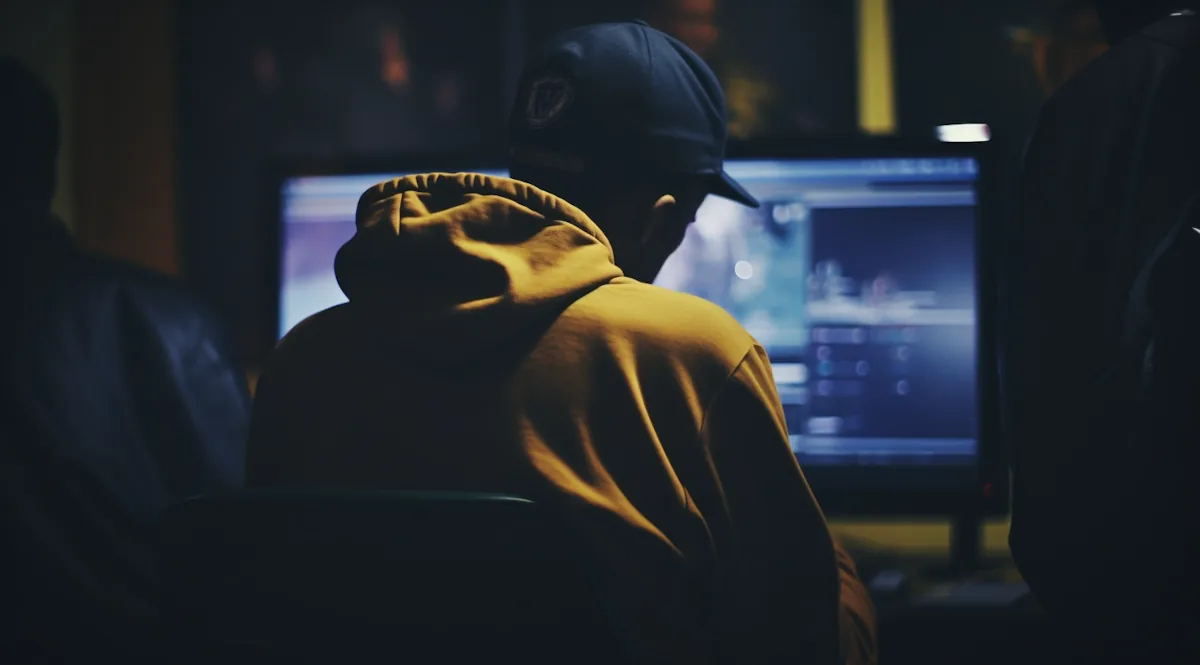
The most effective defense is one that keeps humans in the loop, empowered by AI systems that detect what the eye cannot.
But the answer is not to remove humans from the equation – it's to stop asking them to fight this battle unarmed. Awareness still matters: it gives people the instinct to question rather than trust by default. What must change is the expectation that awareness alone is sufficient. The most effective defense is one that keeps humans in the loop, empowered by AI systems that detect what the eye cannot, flag what intuition misses, and verify identity at a level of precision no individual can sustain on their own. Ultimately, maintaining trust in digital interactions will depend on building systems that recognize a new reality: seeing is no longer believing.
The deepfake arms race is an AI problem. It requires an AI solution – one that works alongside people, not instead of them. The companies that build this partnership between human oversight and automated verification today will be the ones that earn and keep their customers' trust tomorrow.
The gap between what people believe they can detect and what they actually can is not a knowledge problem that awareness campaigns alone will fix.
It is a structural vulnerability in any system that places the burden of verification solely on the human eye.
For businesses operating in the US market, the implications are immediate and material. Fraud losses tied to synthetic identities already represent billions of dollars annually, and the tools to create convincing fakes are now accessible to anyone with a browser. Meanwhile, the roughly 7% of users who combine poor detection ability with high confidence and low verification habits represent an ever-present soft target that bad actors will continue to exploit.
Methodology overview
The research was conducted by Kantar in February 2026 using an online access panel.
Total sample: 3,000 respondents
- United States: 1,000
- United Kingdom: 1,000
- Brazil: 1,000
Participants were aged 18 to 64, with quotas applied to ensure nationally representative samples in each country based on age, gender, and region. The survey took approximately 9 minutes to complete and included both demographic questions and practical evaluation tasks.
Respondents were asked to assess 16 visuals:
- 8 real
- 8 AI-generated or manipulated
These included:
- Fully AI-generated images
- AI-generated videos
- Faceswap content
To reduce bias, all visuals were presented in randomized order. Participants completed both individual evaluations and direct comparisons between real and fake content. Detection accuracy was calculated using a scoring index that benchmarks performance against a defined chance-level baseline.
About Veriff
Veriff is a global AI-native identity platform that helps organizations build trust online. Leading companies across financial services, marketplaces, mobility, gig economy, and other digital sectors rely on Veriff’s technology to stay compliant, prevent fraud, protect users, and scale globally.
Veriff’s trust infrastructure supports the full customer journey, from verification to ongoing authentication and fraud prevention, with the least friction for honest people. Built for global scale, Veriff helps businesses expand across borders without the complexity of managing identity verification, compliance, and fraud in multiple markets – creating a single source of truth for trusted identities.
Trusted by 4,000+ companies






Move beyond deepfake awareness.
Build your business' defense.